

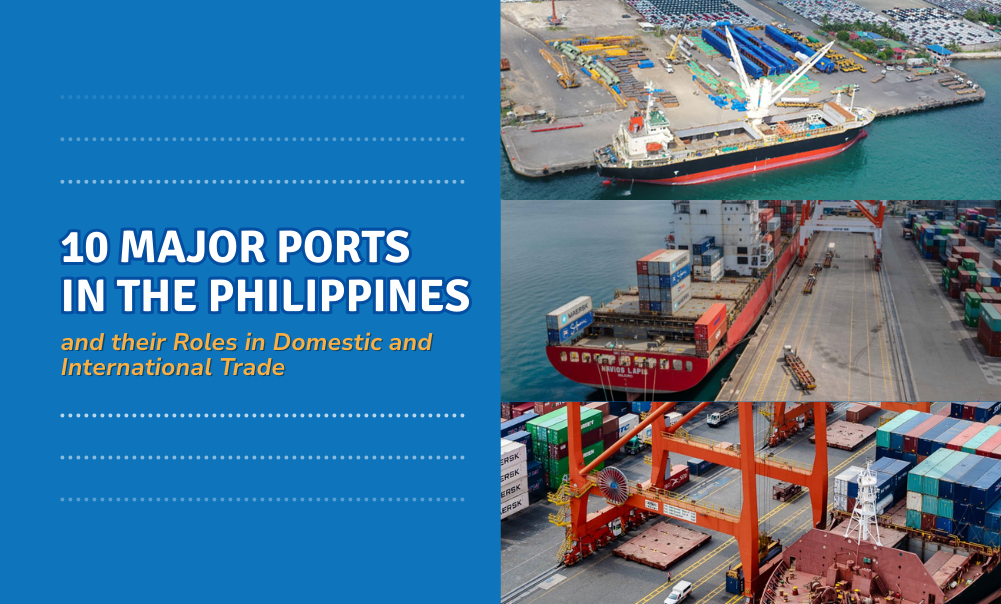
The major ports in the Philippines serve as primary hubs for international trade. The archipelago is surrounded by a number of international trade routes, with domestic and international vessels making ship calls every day. According to the most recent data, in 2023, the Philippine Ports Authority (PPA) reported a total of 562,888 ship calls, while the Cebu Port Authority recorded 136,879.
Maritime trade is one of the country’s prime drivers of economy and network. Find out more in this list of major ports in the Philippines and their main functions.
10 Key Ports in the Philippines that are Essential to Cargo Shipping
1. Port of Manila
Known as Pantalan ng Maynila, this is one of the busiest major ports in the Philippines, with a yearly traffic of nearly 21,000 vessels. It is both a natural and artificial harbor spanning 137.5 hectares. It is further divided into three harbors.
- Manila North Harbor: Domestic passenger vessels, cargo shipping vessels
- South Harbor: International cargo
- Manila International Container Terminal (MICT): International and domestic cargo, container shipment
2. Port of Cebu
Managed by the Cebu Port Authority, it is another major international port in the country. The harbor is split into two. The domestic port spans 21 hectares while the international port covers 14 hectares.
The Port of Cebu is located in the North Reclamation Area. Its central function is servicing passenger and cargo ferries to neighboring provinces in Visayas and Mindanao. It is also a major gateway for international and domestic dry/liquid bulk handling and container shipment.
In February 2025, the groundbreaking ceremony for the New Cebu International Container Port took place in Barangay Tayud, Consolacion, Cebu. This is part of the major development efforts to expand the capacity and conduciveness of the Port of Cebu.
3. International Port of Batangas
Batangas Pier, situated in Barangay Santa Clara, Batangas City, is the second largest major port in the Philippines, spreading over 150 hectares. It has facilities for passenger and cargo shipping, managed by the PPA and Bureau of Customs. Besides linking the islands of South Luzon and Visayas, the Port of Batangas is a reliever to minimize congestion at the Port of Manila and Subic.
It continues to undergo modernization efforts as a way to encourage tourism and interconnectivity in the region. Development plans include the STAR Tollway and a new international container terminal in Bauan.
4. Port of Subic
This is also known as the Subic Bay Port and Freeport Zone, and is one of the major ports in the Philippines that spans over the Zambales towns Olongapo and Subic, as well as Hermosa and Morong towns of Bataan. It is managed by the Subic Bay Metropolitan Authority (SBMA) and plays a key role in commercial trade and export. Separate areas hold facilities specifically for grain bulk cargo, fertilizer shipments, and general goods. It also makes cruise ship calls.
The area was formerly home to the U.S. Naval Base until the decommissioning on November 24, 1992.
5. Port of Davao
The Port of Davao services ships operating around the Davao Gulf (Davao Oriental, Davao De Oro, Davao Del Norte, Davao Del Sur). It plays an important role in container and cargo shipping in the Philippines, especially in the Visayas and Mindanao areas. Trade goods are divided among 9 private piers:
- Davao Union Cement Pier: Cement, coal, ore
- Legaspi Oil Company Pier: Coconut products
- Mati Wharf, Davao Oriental: General goods, timber, corn
- Pacific International Terminal Pier: Banana and fruit
- Piso Point Port, Davao Oriental: Minerals
- Santa Ana Pier: Domestic passenger vessels and RoRo
- Stevedorage Services Corp. Pier: General and bulk cargo, vehicles
- Tefasco Pier: Industrial goods
- Universal Robina Pier: Grains, flour products
6. Port of Iloilo
In the Visayas region, the Port of Iloilo is one of the gateways for passenger and cargo ferries in transit to neighboring islands and provinces. It served as one of the major ports in the Philippines since the Spanish colonial period. It is also considered one of the safest ports, with Guimaras Island serving as the harbor’s barrier from natural hazards.
In 2023, the Port of Iloilo recorded the most shipcalls at 171,359, according to the PPA. It currently services passenger ferries, cargo, and container shipments.
7. Port of Cagayan De Oro
The PPA-run Port of Cagayan De Oro facilitates the passage of vessels in the Northern Mindanao and Visayas regions. Although it is considered a medium-sized harbor, the port also houses private offices and sites owned by Del Monte Philippines and General Milling, aside from its passenger and cargo facilities.
Agricultural goods coming from the provinces of Bukidnon, Agusan, Misamis Oriental, and Davao take up a large portion in the port’s commercial trade.
8. Port of General Santos
At the southern tip of the Philippines, the Port of General Santos acts as a gateway to international trade, particularly in the fishing industry. Its fish port can accommodate reefer containers, exports of high quality tuna and fish, and houses modern fish processing facilities.
Another role of the General Santos port is that it links the Philippines to Indonesia for international ferry travel, carrying passengers, container, and cargo.
9. Port of Zamboanga
The Port of Zamboanga is one of the busiest major ports in the Philippines and Mindanao. It is managed by the PPA PMO-Zamboanga and spans 15.6 hectares. This port plays a crucial role in the export of seafood and other goods. Its main highlight is the sardine export to the United States and countries in Europe, Middle East, and East Asia. It is also the main gateway into the Zamboanga Peninsula.
As the central seaport of Western Mindanao, it caters to domestic and international passenger, container, and cargo vessels.
10. Port of Lucena
The Port of Lucena, located at Dalahican, is an emerging player in the major ports in the Philippines. It is also one of the ports that aid in the decongestion of the Port of Manila.
Its role mainly lies in the export of fish, supported by the Lucena Fish Port Complex, a leading hub for fresh seafood products. Besides that, the Port of Lucena services ships plying Southern Luzon, loaded with passengers and non-containerized goods.
Vital Roles of Major Ports in the Philippines
Connects the Philippines to global markets
Major ports are the gateway for import and export activities in the Philippines. Without them, the country would not be able to participate in international trade. Philippine products actively participate in the global market, especially in the Asia and the Pacific region, thanks to these major ports. They are also important for fostering strong economic ties with neighboring countries and flourishing economies.
Facilitates the seamless transport of goods
Logistics is an important component in the supply chain. To achieve a robust logistics process, ports provide areas for the storage, loading, unloading, documentation, and distribution of goods. The role of major ports in the Philippines is to efficiently facilitate a smooth transportation process, thus they serve as a critical hub for logistic activities.
Encourages growth in the tourism industry
The Philippines’ major ports do not only connect goods, but also people. Passenger ferries, RoRo vessels, and the like ply the seas of the country daily to transport local and international tourists to their destination. It also enhances the interconnectivity of local residents between island provinces. The Visayas region is a good example of a group of provinces linked together by many major ports.
Major ports in the country play their respective roles in specific industries. As the backbone of maritime trade and transport, it augments the growth of passenger and cargo shipping in the Philippines. At present, the government and private entities continue to invest in port expansion and improvement projects to further develop more robust passenger and cargo shipping systems.
ALSO READ: The Best Cheap Cargo Shipping Options for Philippine Businesses
Choose Starlite Ferries as your partner for Philippine cargo shipping. Our services extend to Batangas, Mindoro, Iloilo, Cebu, Surigao, Zamboanga, and more. Experience safe and secure cargo shipping across South Luzon until Mindanao with us today. Check our schedules and rates here.