

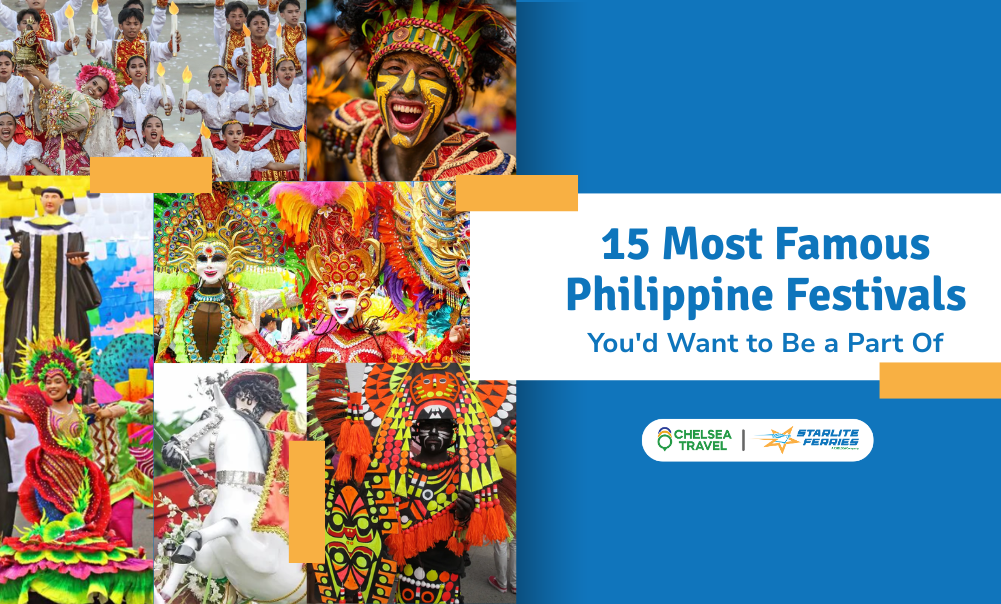
Festivals in the Philippines are recognized for their joyfulness, elaborate celebrations, and cheerful social activities. Locals prepare for various events like street dance competitions, float parades, arts & crafts trade fairs, food markets, and cultural shows. Through memorable festivities, communities are able to celebrate their stories and strengths. That’s why it’s no mystery how tourists from all over the country (and the world!) gather to witness wonderful holidays like this.
If you’re curious about popular festivals in the Philippines, or want to participate in one during your next trip, this guide can help you plan out your visit this year.
15 Popular Festivals in the Philippines You Shouldn’t Miss
-
Feast of the Black Nazarene (Manila)
The Feast of the Black Nazarene tops the most famous festivals in the Philippines. Every January 9th, over a hundred thousand devotees participate in the Translacion, or the procession of the statue to Quiapo Church. The Black Nazarene is also said to have healing powers. Many join in celebrating this fiesta in the Philippines, with smaller Translacion held in various parts of the country.
-
Parada ng mga Lechon (Batangas)
The municipality of Balayan, Batangas combines culture and faith during Parada ng mga Lechon, held annually every June 24th. The fiesta begins with a mass to bless roasted pigs, all clad in clever outfits. Afterwards, these lechon lead the parade across the town. It also coincides with the feast of St. John the Baptist. Because of this, the locals soak each other in water as an entertaining tradition.
-
Panagbenga Festival (Baguio)
Every February, Baguio City blooms in color as the Panagbenga celebrations begin. It is one of the famous festivals in the Philippines, known for its extravagant, impressive floral float parade. It shows the dynamic Cordilleran culture, tradition, arts and crafts, and various local specialties through month-long activities.
-
Higantes Festival (Rizal)
This secular feast takes place late November before the official feast of Angono, Rizal. The towering, multicolored paper-mache puppets made the Higantes Festival one of the famous Philippine festivals. Folk stories say the puppets are effigies of hacienderos, serving as symbols of agrarian protest in the late Spanish colonial period. It also honors their patron saint, St. Clement.
-
Moriones Festival (Marinduque)
The island of Marinduque celebrates this unique lenten festival on Holy Week. During this event, men and women wear Roman soldier masks and outfits, parading through the island while theatrically recreating the Passion of Christ. These soldiers are searching for St. Longinus, who was said to be the soldier who pierced Jesus’ side.
-
Capiztahan Festival (Capiz)
This festival commemorates the creation of the province of Capiz. It also honors former President Manuel A. Roxas, a Capiz native and the capital’s namesake. On April 15th each year, the streets of Roxas City are filled with street dancers, colorful banderitas and costumes, and dynamic performances depicting various aspects of the country’s history. Of course, as the seafood capital of the Philippines, Capiztahan won’t be complete without seafood!
-
Sinulog Festival (Cebu)
The Sinulog Festival is one of the grandest festivals in the Philippines, often celebrated the entire month of January. It honors the Santo Niño or Infant Jesus, and depicts the transition from Filipino folk faith to Christianity. Cebu City is where the main events happen, particularly the Grand Fluvial Parade, inter-school street dances, the Festival Queen pageant, processions, trade fairs, and more. Small-scale celebrations of the Sinulog Festival are also celebrated across Cebu and other provinces.
-
Ati-Atihan Festival (Aklan)
The Ati people of Aklan celebrate this festival during the 3rd Sunday of January. This tradition celebrates the Santo Niño through dances, parades, religious processions, and street performances like ‘Sadsad’. This is performed by locals clad in body paint and colorful costumes. It is also said to be the mother of all festivals in the Philippines.
-
MassKara Festival (Bacolod)
The unique Pinoy masquerade, better known as the MassKara Festival, depicts resilience amid trials and hardships. In October, locals don smiling masks, vibrant clothing, flowers, feathers, and paints. Its touching origins is what makes it one of the famous Philippine festivals. The celebration also consists of activities like street dance competitions, the Miss Bacolod MassKara pageant, food fests, market fairs, and music concerts.
-
Dinagyang Festival (Iloilo)
Every 4th Sunday of January, people travel to Iloilo as the streets of the city come alive with color. The Dinagyang Festival is also one of the festivals in the Philippines that honors the Santo Niño, as well as the agreement between the Malay settlers and the indigenous Ati people of Panay Island. The festival hosts tribal competitions, parades, and the recently added ILOmination and Parade of Lights. This is also the origin of the phrase Hala, Bira!, meaning to ‘give your all’.
-
Manggahan Festival (Guimaras)
Guimaras province is famous for their Guimaras Super mango, a local variety that is said to be the sweetest in the country. For this reason, the Manggahan Festival is held annually in May. The month-long celebration typically involves a festive Mango Eat-All-You-Can event, street dances, cooking competitions, concerts, and their awaited beauty pageant, Mutya ng Guimaras and Mr. Guimaras.
-
Bonok-Bonok Maradjaw Karadjaw Festival (Surigao del Norte)
This vibrant festival’s name is derived from the local word ‘bonok’, meaning ‘heavy downpour’. It is a story of resilience, interpreted as a downpour of blessings and positive wishes. Bonok-Bonok is a thanksgiving celebration celebrated every September, and is also part of the charter festivals in the Philippines.
-
Kadayawan Festival (Davao)
One of the most famous festivals in the Philippines is held in Davao City, usually in the third week of August. Kadayawan Festival got its name from the word ‘madayaw’, which means ‘valuable’ or ‘good’. It encapsulates the abundant harvest, vibrant cultural background of the province, its locals, and indigenous groups. Like most famous Philippine festivals, it is celebrated through street performances, trade exhibitions, food galore, and parades.
-
Balangay Festival (Butuan)
In 1976, nine balangay boats were excavated in Butuan City, Agusan Del Norte, the first wooden watercraft used by the first Filipino settlers. The Balangay festival celebrates the rich heritage of this discovery, as well as the significant historical role of the province. The Balangay Boat-Building and water parade are two of the most anticipated highlights of the celebration.
-
Kinabayo Festival (Dapitan)
The origins of the Kinabayo Festival goes back to the arrival of the Jesuits in Zamboanga del Norte, where they discovered Dapitan was invaded by Moros. To defeat the Moros and for protection against calamities, they sought the intercession of St. James the Apostle, depicted atop a horse, wielding a sword. It is celebrated through reenactments of the Battle of Clavijo, street dance and sports competitions, beauty pageants, and night markets.
Why Locals Love Celebrating Fiesta in the Philippines
Festivals in the Philippines are far from simple celebrations. They are energetic, grand, musical, and highly social. Rather than a form of entertainment, celebrating a fiesta in the Philippines becomes an outlet of creativity and culture. It honors local history, owing to past colonizations, occupations, and pre-colonial traditions that shaped Filipinos today. There are festivals that also highlight religious devotion, especially in a predominantly Catholic country.
Famous Philippine festivals have also become a way to promote tourism across various provinces and regions. They introduce local stories, traditions, and specialties to visitors who have yet to discover the wonders of the archipelago.
ALSO READ: All the Thrilling Capiz Festivals that You Should Check Out
Celebrating fiesta in the Philippines is not just for entertainment, but it keeps the rich cultures of each province, city, or town alive despite modernization. Famous festivals in the Philippines also help boost tourism activity and give residents an opportunity to bond, showcase their skills, and take pride in their vibrant community.
Starlite Ferries offers safe, scenic journeys to different parts of the Philippines. Whether you’re celebrating the Sinulog Festival in Cebu or the Capiztahan fiesta in Capiz, you can enjoy a timely and convenient voyage wherever you go. Choose from a reclining seat, bunk bed, or book a cabin for extra privacy. Browse through our popular RoRo routes today. For inquiries, you may contact us here.